Plumbing Repair
 Water Heaters
 Gas Lines & Appliances
 Gas Leak Detection
 Drain Cleaning
 Sewer Line Services
 Leak Detection
 Repiping
 Water Softeners & Filtration
 Fixture Installation
 Emergency & Same-Day
Smell Gas in Your House? What to Do in the First Five Minutes
A rotten-egg smell can mean a gas leak. Here's exactly what to do, and not do, plus what happens after the utility makes it safe.
Natural gas and propane have no smell on their own. Utilities add an odorant called mercaptan so you can detect a leak. That’s the “rotten egg” or sulfur smell. If you smell it in your home, take it seriously.
If the smell is strong, or you hear hissing
Get out first. Call second.
- Leave the house now. Take people and pets. Leave the door open behind you if it’s easy.
- Don’t touch anything electrical. Don’t flip light switches on or off, don’t unplug anything, don’t use the garage door opener, and don’t start a car in an attached garage. A tiny spark can ignite gas.
- Don’t use your phone inside. Call once you’re safely outside and away from the house.
- Call your gas utility’s emergency line or 911 from outside. For Huntsville Utilities, Athens Utilities, Decatur Utilities or your propane supplier, the emergency number is on your bill and on their website. Save it in your phone today.
- Don’t go back in until the utility or fire department says it’s safe.
If the smell is faint or comes and goes
A faint smell near the stove, water heater, dryer or gas meter still deserves attention, just not panic.
- Check whether a burner knob is slightly on or a pilot light is out.
- If the smell doesn’t clear up quickly, or you can’t find the source, treat it as a leak and follow the steps above.
- If the utility has already checked it and you need the leak found and repaired, that’s where we come in.
What happens after the utility makes it safe
When the utility responds to a leak, they’ll often shut off and lock the gas at the meter until repairs are made. To get your gas back on:
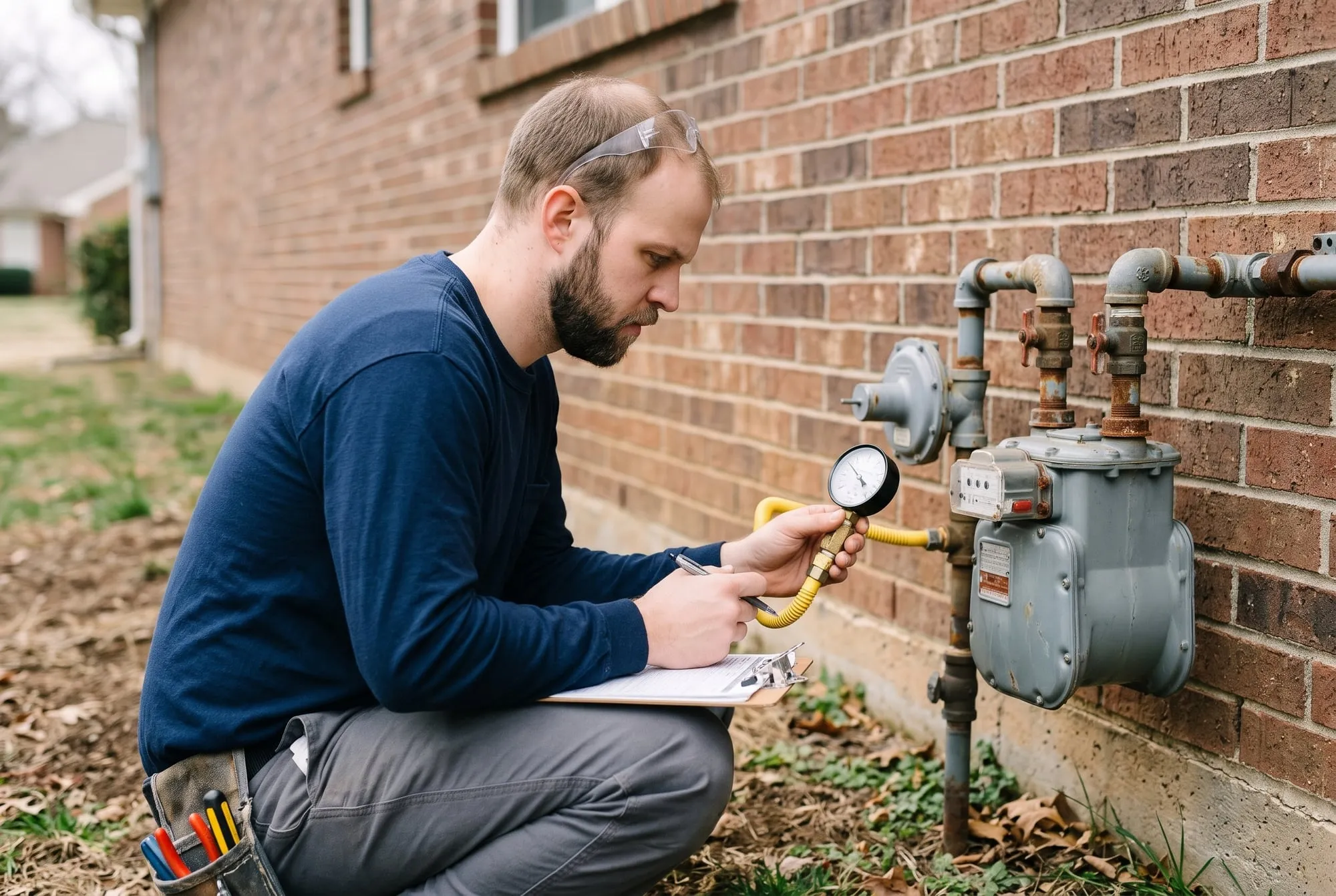
- A master gas fitter finds and repairs the leak. We use an electronic gas detector and a pressure test to pinpoint it, whether that’s a failed flexible connector, a leaking valve or a corroded fitting.
- The system is pressure-tested to prove it’s tight. We document the readings.
- Inspection and utility coordination where required, then gas is restored and appliances are re-lit and checked.
The most common leak points we see
- Old flexible appliance connectors, especially the uncoated brass type found behind older ranges and dryers
- Gas valves that have been bumped or are failing
- Threaded joints at the water heater or furnace
- Buried yard lines to grills, fire pits or detached buildings
Prevent it
- Replace any old, uncoated brass flex connector with a modern coated one.
- Have the gas system pressure-tested when you buy a home, add an appliance, or if your home is over 30 years old.
- Install a natural gas detector (they’re different from carbon monoxide detectors) near gas appliances.
Need a leak found and fixed, or a pressure test for an inspection or insurer? Book a gas leak diagnostic. The $150 is credited to the repair.