Plumbing Repair
 Water Heaters
 Gas Lines & Appliances
 Gas Leak Detection
 Drain Cleaning
 Sewer Line Services
 Leak Detection
 Repiping
 Water Softeners & Filtration
 Fixture Installation
 Emergency & Same-Day
Do You Have Polybutylene Pipe? A Guide for Huntsville Homeowners
Homes built from the late 1970s to the mid-1990s may have polybutylene water lines. Here's how to identify it, why it matters, and what replacing it costs.
Tens of thousands of homes across the Huntsville metro were built between 1980 and 1999. That’s right in the window when polybutylene (PB) was a popular, inexpensive water supply pipe, roughly the late 1970s through the mid-1990s.
Polybutylene fell out of favor because it has a reputation for failing without warning, often at the fittings, after years of exposure to the chlorine in treated water. It was the subject of a large class-action settlement in the 1990s and hasn’t been allowed under the model plumbing codes for decades.
How to tell if you have it
Look where pipes are exposed:
- At the water heater (the lines coming in and out)
- Under sinks, where the supply lines come out of the wall
- In the crawlspace or unfinished basement
- Near the main shutoff where water enters the house
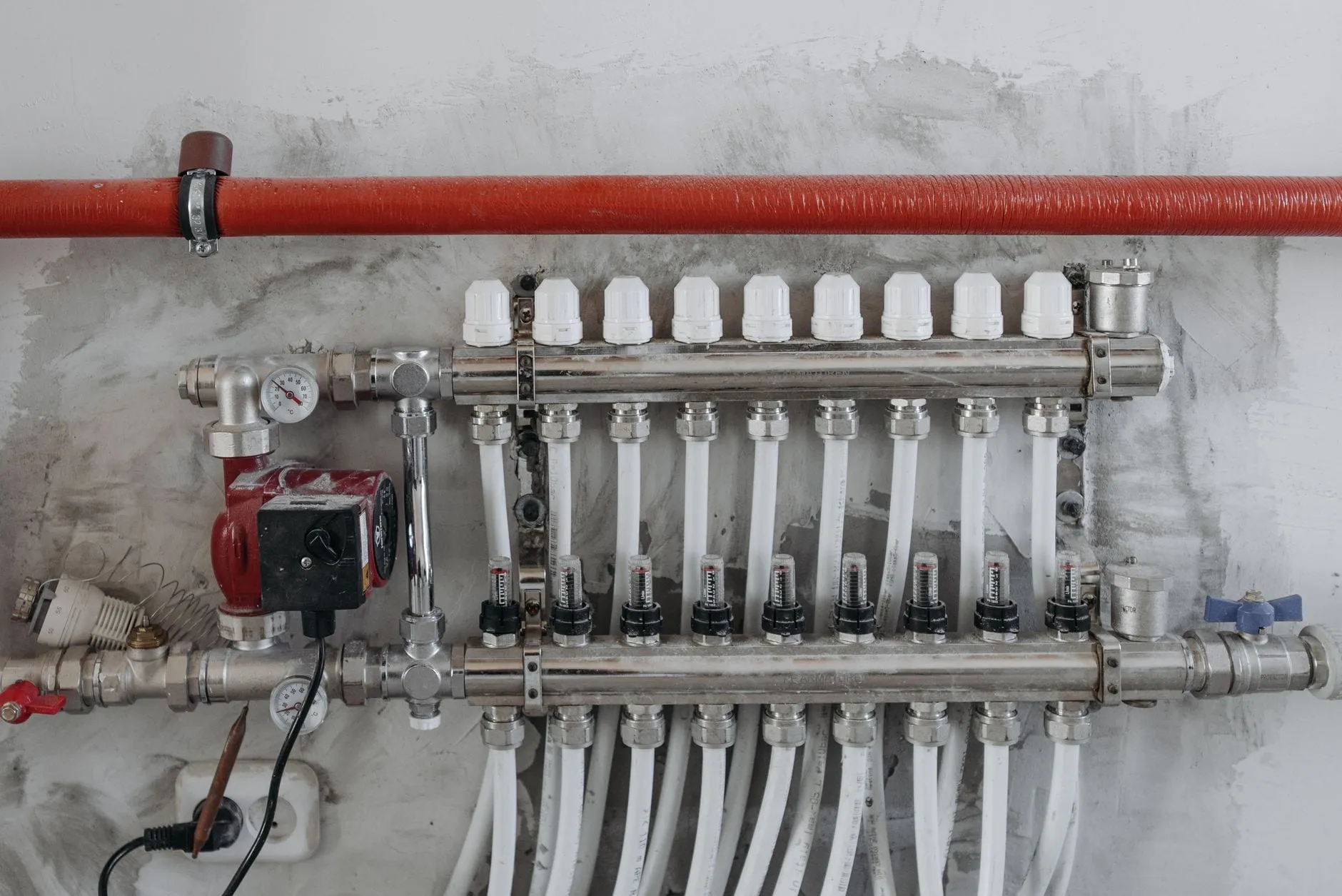
Polybutylene is usually gray (sometimes blue or black outdoors), slightly flexible, and about the diameter of a finger. It’s often stamped “PB2110”. The fittings may be plastic (gray or white) or copper or aluminum crimp rings.
Don’t confuse it with:
- PEX, which is usually red, blue or white, stamped “PEX,” and is a modern, reliable pipe
- CPVC, which is rigid and cream or tan-colored
- Copper, which you’ll know when you see it
Not sure? Send us a photo. We’ll tell you for free.
Why it matters
- Leaks. PB failures tend to show up as sudden leaks at fittings, sometimes behind walls or under floors.
- Insurance. Some insurers ask about it, may charge more, or may decline coverage on homes with PB.
- Selling or buying. Home inspectors flag it, and buyers often ask for a credit or replacement.
Your options
1. Leave it and watch it. If it’s not leaking, some homeowners choose to wait, especially if they’re planning a remodel. Know where your main shutoff is.
2. Partial replacement. Replace the most exposed sections, like the water heater connections and accessible crawlspace runs. This starts around $1,295, but it leaves PB elsewhere in the system.
3. Whole-home repipe. Replace all supply piping with PEX (or copper). This is the permanent fix. In a typical 1–2 bath home, our repipes start around $5,900, and 3–4 bath homes start around $8,900. National cost guides put typical repipes anywhere from about $4,000 to $12,000.
What a repipe involves
Most repipes take 2 to 4 days. You’ll have water at the end of most workdays. We route new PEX through attics, crawlspaces and walls with as few openings as possible, add new shutoff valves at every fixture, pressure-test everything before walls are closed, and pull the permit and inspection. Drywall patching can be included if you’d like.
Every repipe starts with a free in-home estimate and a written scope, so you know exactly which lines are being replaced and where they’ll run.